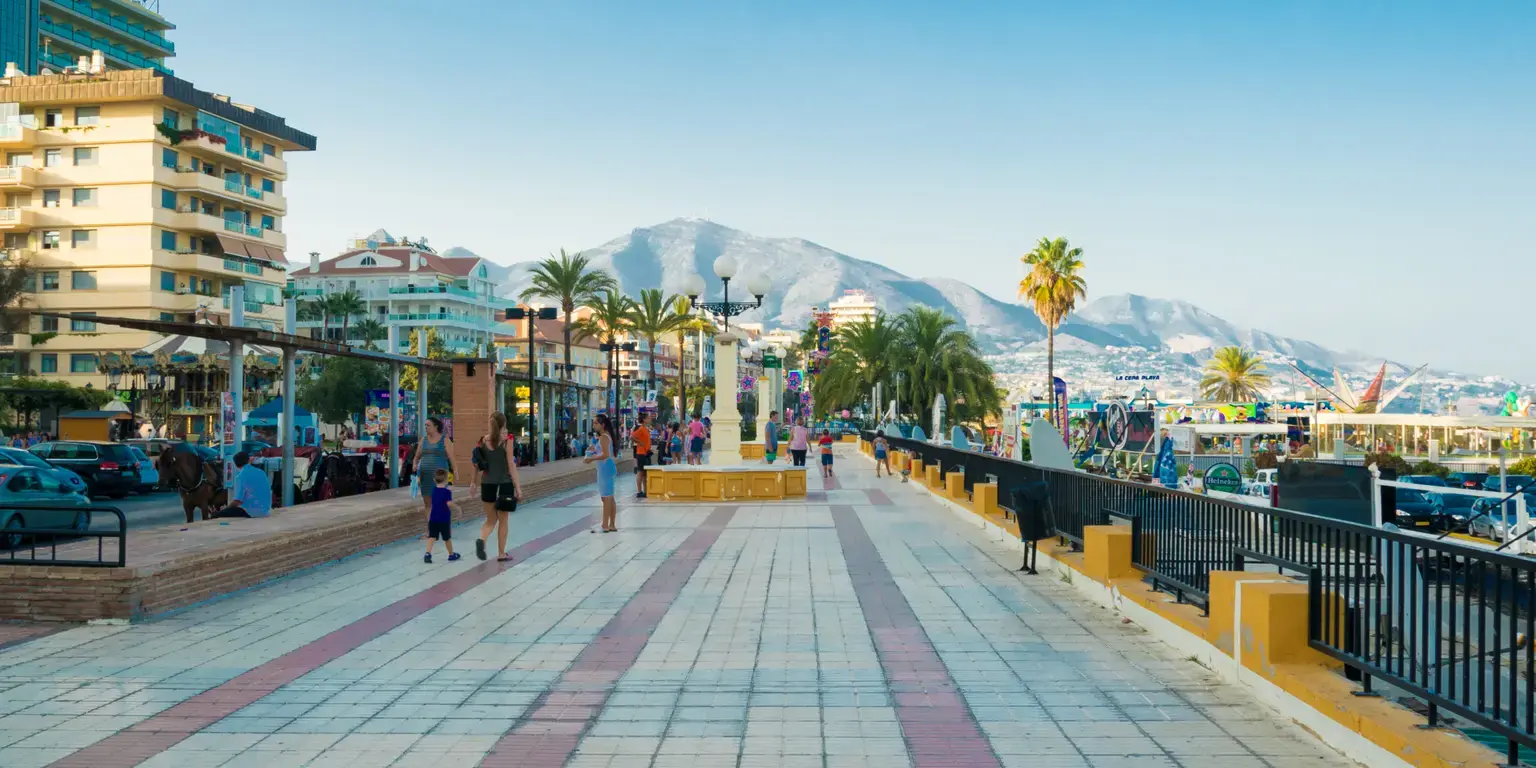

Why are house prices on the Costa del Sol rising, and why are more and more Europeans buying property in Spain? Many people are asking exactly that right now. While housing markets in several European countries have been shaken by interest rate changes, economic uncertainty and bigger swings, the property market on the Costa del Sol has developed remarkably strongly. In recent years demand for homes in areas such as Fuengirola, Mijas, Marbella, Estepona and Benalmádena has been high, and there are several good reasons for it.
The latest figures from Spain's National Statistics Institute (INE) show that house prices in Spain rose 12.2 per cent over the past year, and a further 3.4 per cent from the first to the second quarter of 2026. Resale homes rose by as much as 12.9 per cent year on year, new builds by 7.4 per cent. That does not mean every home or every area is rising by the same amount: the differences between municipalities and types of property are large. But it does show that the underlying demand for housing in Spain is still strong.
On the Costa del Sol an extra factor comes into play: the international buyer market. The Costa del Sol is not just a local Spanish housing market. British, Dutch, German, Belgian, Scandinavian and many other buyers purchase homes here. In Málaga province, foreign buyers accounted for 37 per cent of registered home purchases in the second quarter of 2026, so more than one in three homes was bought by someone from abroad. Across Spain, British buyers were the largest foreign group that quarter, just ahead of the Dutch, with Germans in third place. This is an important difference from many other markets: when buyers come from many different countries, the market is less dependent on how any single economy is doing.
The third force is supply and demand in its simplest form. The best locations on the Costa del Sol are limited. The sea is on one side and the mountains on the other, and at the same time Spain's Coastal Act and local planning rules restrict where and how building can take place. The result is fairly predictable: when more people want to buy than there are attractive homes for sale, prices come under pressure. Our article on why too little is being built goes into this in more detail.
Nor is the price pressure spread evenly. It is strongest for homes that tick the boxes most buyers are actually looking for: sea views, a short walk to the beach, good, usable terraces, golf nearby, a modern standard, a communal pool, parking and storage, and good connections to Málaga airport. The more of these boxes a home ticks, the stiffer the competition for it, and the less likely it is to stay on the market for long.
If you are thinking of buying, the point is not that prices will simply keep going up. The market can correct, and interest rates, the economy and political decisions can all change the picture. The point is that the forces behind the trend are structural and will not disappear overnight. We follow these figures closely and are happy to help you understand what they mean for the exact segment and area you are looking at. You can browse homes for sale or get in touch with Solkystmegleren for a no-obligation chat.
The figures in this article come from official INE statistics and from registered transactions recorded by the Spanish land registries for Málaga province in 2026, and give a snapshot. Past price growth is no guarantee of future returns.
Sources
The links lead to the sources in their original language.
- Spain's National Statistics Institute (INE): Housing Price Index (IPV), second quarter 2026 (opens in a new tab) (Checked 23 October 2026)
- Spanish land registries (Registradores de España): Land registry property statistics, second quarter 2026 (opens in a new tab) (Checked 23 October 2026)
- Spanish land registries (Registradores de España): Statistics portal of the land registries (opens in a new tab) (Checked 23 October 2026)
- Spain's Official State Gazette (BOE): Coastal Act (Law 22/1988) (opens in a new tab) (Checked 23 October 2026)